
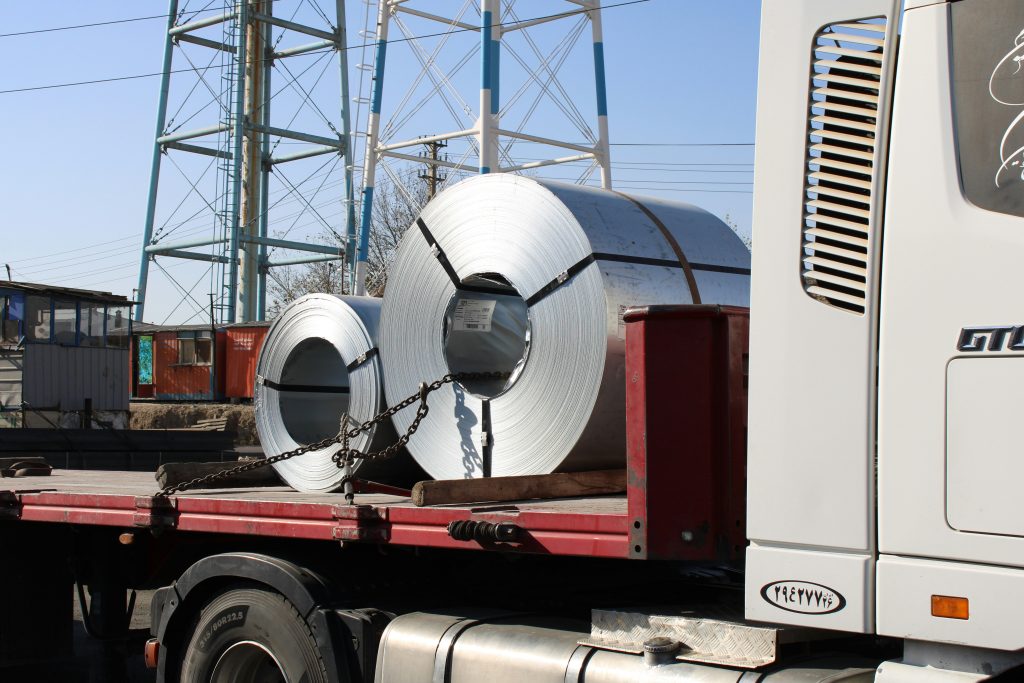
Quick Answer: Buying directly from an Indian Steel mill usually means large minimum orders, advance or Letter of Credit payment, delivery on the mill’s rolling schedule, and strict paperwork. You may get a better base Rate and traceable quality, but you also take on more planning, working capital and logistics than when you buy from a dealer or stockist.
A lot of buyers think the Mill is where the real Price is, and dealers just add margin on top.
There is some truth in that.
But going direct is not the same as walking into a yard and picking up material. It works on the Mill’s terms, and those terms can catch you off guard if you have never done it before. And honestly, I think a lot of people chase “direct from mill” because it sounds impressive, not because their Business is ready for it.
So here is what to expect, who it suits, and how to prepare.
How Steel Normally Reaches Buyers
- Producers make and roll the steel.
- Authorised distributors and dealers buy in bulk and hold stock in each region.
- Stockists and traders sell smaller lots, often with cutting, loading and some credit.
- End users (builders, fabricators, manufacturers) buy from any of the above.
Big mills sell much of their output through dealer networks. Direct sales usually go to large accounts like infrastructure companies, OEMs and big project contractors.
Why Buyers Want to Go Direct
- A possibly better base Price, since there are fewer margins in the chain
- Traceable quality, with Mill Test Certificates and Heat Numbers straight from the source
- Control over specs: exact grade, size and length
- Supply security on long projects, through contracts or periodic orders
- Clean documentation for audits and compliance
All good reasons. None of them is a reason to rush.
What Direct Buying Actually Looks Like
Minimum Order Quantities
Mills roll in big campaigns and prefer big orders. Expect minimums from several tonnes up to full truckloads, and sometimes more for particular sections. It varies by mill and product, so get it in writing.
Payment terms
Mills are stricter than local traders.
Advance payment or RTGS before dispatch is common for smaller direct buyers. Large or repeat accounts may get a Letter of Credit or bank guarantee arrangement. Open credit usually goes only to established customers with a track record.
So plan your Working Capital properly. You may be paying before the Steel is even rolled. If your cash flow is already tight, this is where a “better rate” turns into a bigger problem.
Lead times
Mills roll specific sections on a programme. If your size is not scheduled, you wait. Sometimes days, sometimes weeks.
A stockyard can often give you the same material the same day, at a higher rate. That is the trade. You are paying the dealer for time and flexibility. Whether that is worth it depends on your business, not on a rule.
Pricing structure
A mill quote generally depends on:
- The ex-works base Rate
- Size, section and grade extras
- Freight and loading
- GST (18% on most Steel products at the time of writing)
- How long the Rate stays valid, which can be very short when the market is moving
Always check whether you have been quoted ex-works, delivered, or for destination. And for how long.
Documents you should receive
- Tax Invoice with GST details
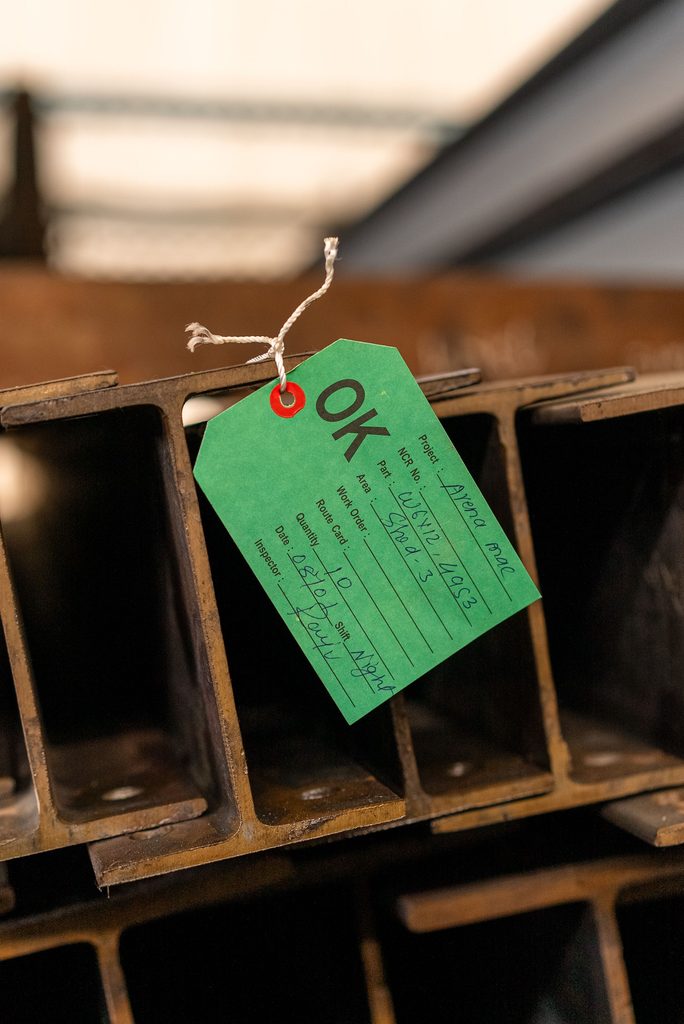
- Mill Test Certificate with Heat Number, chemistry and mechanical properties
- BIS licence or ISI mark for products under mandatory standards
- E-way bill
- Weighment slip and delivery challan
Match the Heat Numbers on the certificate with the markings on the material. If they don’t match, stop and ask. Don’t unload first and argue later.
Logistics
Once you buy directly, freight is on you, or on a freight arrangement you negotiate. Think about truck type and capacity, over-dimensional consignments for long sections, loading and unloading at your end, transit insurance, travel time from the mill, and who handles shortage or damage claims.
Inspection on delivery
Even certified mills make mistakes.
Check dimensions, lengths and weight tolerance. Look at the surface for cracks, rust and pitting. Check bundle tags and markings. Count and weigh against the documents. Large projects often bring in third-party inspection before dispatch.
Direct From Mill vs. Dealer
| Factor | Direct from Mill | Dealer/Stockist |
|---|---|---|
| Order size | Large MOQ | Small to medium lots |
| Price | Often a better base Rate | Includes dealer margin |
| Payment | Advance or LC common | Credit often possible |
| Delivery | Programme-based, slower | Often immediate |
| Size variety | Mill’s current range | Mixed stock from several mills |
| Flexibility | Lower | Higher |
| Documentation | Strong, direct | Depends on the dealer |
The Real Risks
- Cash flow pressure from large advances
- Price swings between order and delivery
- Storage costs if you over-order or your consumption is uneven
- Delays if the mill reschedules rolling
- Fraud from fake “mill-direct” sellers
Fake “direct from mill” offers
This one deserves its own warning.
Steel attracts fraud. A “direct from mill, special Rate” message on WhatsApp should make you more careful, not less. If a Rate looks too good to be true in Steel, it usually is.
- Check the seller’s company registration, GST number and mill authorisation.
- Don’t send big advances to people you have not verified.
- Make sure the bank account matches the registered entity.
- Confirm the mill’s official contact details yourself, from the mill’s own channels.
- Inspect and weigh the material on delivery.
From being around the factory and business side of Steel, one thing I have learned is that ‘mill-direct’ sounds much simpler than it actually is. The real calculation starts after the quoted Rate: MOQ, Freight, Payment terms, Storage, Delivery schedule and how much Working Capital gets locked up. A lower ex-mill number is not automatically a lower landed cost. That is the part people miss when they look only at the headline Rate.
Who Should Actually Go Direct?
It makes sense for large contractors and infrastructure firms, manufacturers with steady high-volume use, fabricators with predictable monthly needs, and traders or distributors who can handle volume and logistics.
For small or irregular needs, a trusted dealer is often cheaper once you count advance payment, freight and storage. A few rupees saved per kg on paper can disappear very fast.
I would actually say this: spend a couple of years buying well from good dealers, and understand your own demand properly, before you go to a mill. Going direct is a step you earn when your volumes and cash flow are ready. Not something you do because it sounds more serious.
How to Start, Step by Step
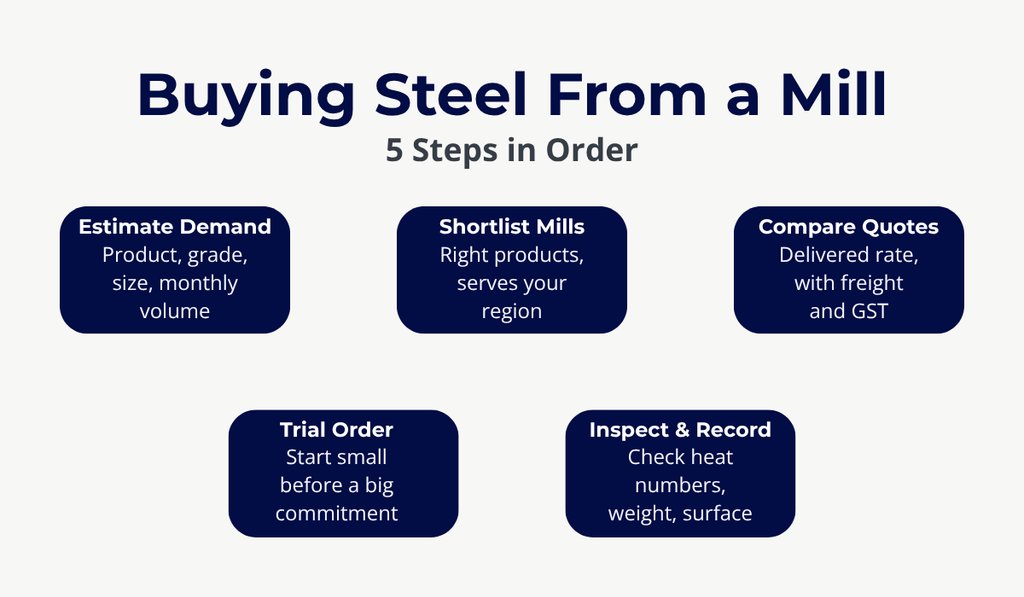
- Work out your demand by product, grade and size, monthly and yearly.
- Shortlist mills that make what you need and serve your region.
- Contact the mill’s sales office or its authorised distributor and ask for price lists and terms.
- Compare quotes on a delivered basis, including freight and GST.
- Check certifications, including BIS licence and Test Certificate format.
- Negotiate the terms: payment, Rate validity, delivery schedule, quality claims.
- Start with a trial order before a bigger commitment.
- Inspect and record every delivery for your audit trail.
Getting a Better Deal
- Combine your requirements to reach the MOQ.
- Time purchases around price dips, but don’t turn it into speculation.
- Build a relationship with the mill’s regional sales team. Steel runs on relationships more than people admit.
- Stay flexible on sizes and lengths where the design allows.
- Mix mill-direct for bulk items with local dealers for urgent top-ups.
Frequently Asked Questions
What is the minimum order quantity for buying from a Steel mill?
It varies by mill and product. Orders usually start at several tonnes and often a full truckload. Confirm with the specific mill
Is Steel cheaper direct from the mill?
The base Rate can be lower, but advance payment, freight, storage and lead time can wipe out the savings for smaller buyers. Compare the total landed cost.
What documents should I get when buying from a mill?
A GST Tax Invoice, Mill Test Certificate, BIS compliance details where applicable, e-way bill and delivery challan.
What payment terms do Steel mills offer?
Mostly advance payment or a Letter of Credit. Credit is typically limited to established customers.
Bottom Line
Going direct can give you quality assurance, traceability and a better base price. It also demands volume, planning, Working Capital and homework on every seller.
If your demand is large and steady, it can pay off. If it is small or urgent, a reliable dealer usually gives you more flexibility. Whichever way you go, get certified documents and verify who you are paying.