
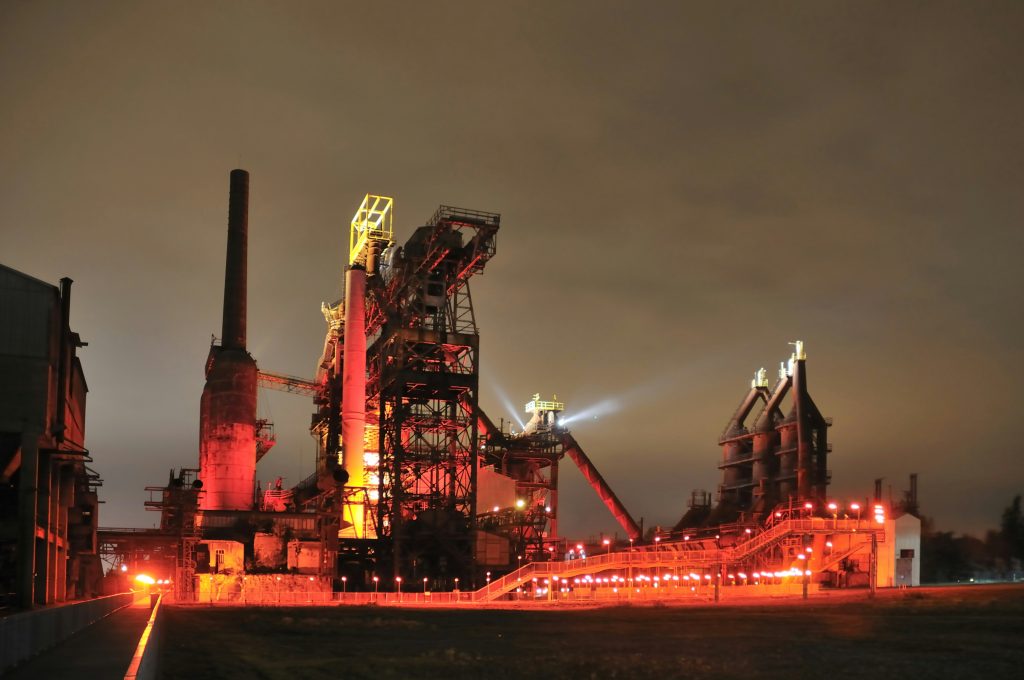
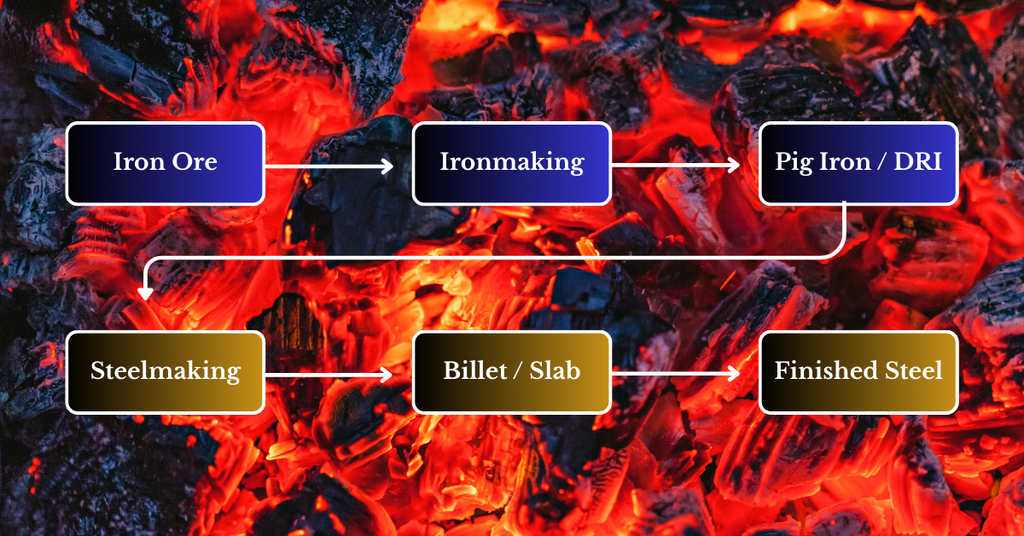
Quick Answer: Ironmaking is the first stage. Iron Ore goes in, and Pig Iron or Sponge Iron (DRI) comes out. Steelmaking is the second stage. That iron, or scrap, is refined so carbon drops below about 2%, impurities are removed, and alloys are added where needed. Ironmaking makes the raw metal. Steelmaking makes the metal you can actually build with.
The One-Line Difference
Ironmaking takes Oxygen out of Iron Ore.
Steelmaking takes extra Carbon out of Iron.
That is it. Everything else is detailed on how it gets done.
What Is Ironmaking?
Iron Ore is not metal the way most people imagine it. It is mostly Hematite (Fe₂O₃) or Magnetite (Fe₃O₄), which is Iron stuck to Oxygen. Ironmaking breaks that bond. The chemical word is Reduction, but just think of it as pulling the Oxygen out.
What comes out is not Steel.
It carries around 4% Carbon, plus Silicon, Sulphur and Phosphorus. That makes it hard, but brittle. Hit it hard enough and it cracks instead of bending. You cannot build a Beam or a Bridge out of it.
What goes into the process
- Iron Ore, as lumps, fines or pellets
- Coke or Coking Coal, which works as both fuel and reducing agent
- Limestone or Dolomite, which binds impurities into slag
- Hot air or reducing gases
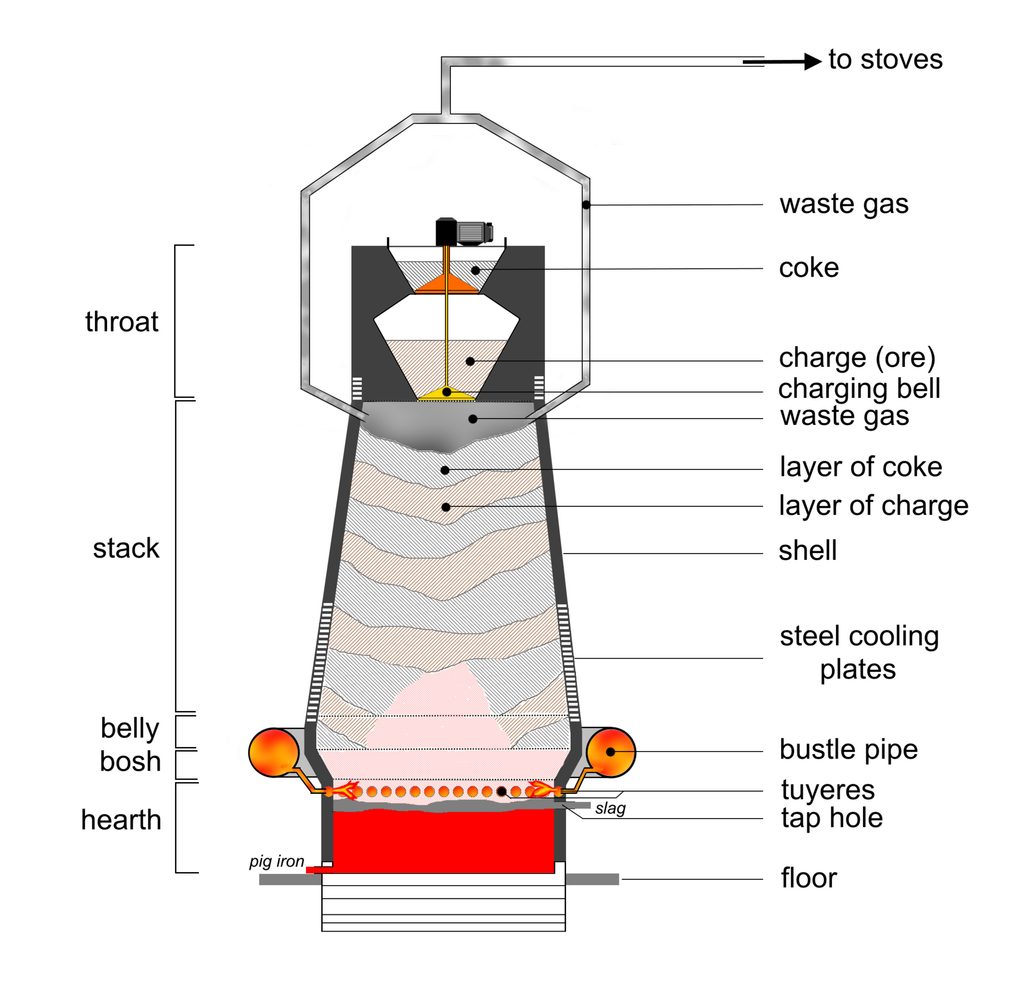
The Blast Furnace route
This is the older, bigger method. Ore, Coke and Limestone go in from the top. Hot air is blown in from the bottom at over 1,000°C. Carbon Monoxide inside the furnace pulls the Oxygen off the ore, and molten Iron collects at the base at roughly 1,500°C.
The product is called Pig Iron, or Hot Metal.
The DRI (Sponge Iron) route
Not every plant uses a Blast Furnace. In Direct Reduction, the ore is reduced without melting it, using Coal or Natural Gas. What you get is solid, porous Sponge Iron, also called DRI.
India is one of the biggest DRI producers in the world. Coal-based rotary kilns are common here because Natural Gas supply is limited and Coking Coal is expensive. That is a very Indian answer to a very Indian problem.
What Is Steelmaking?
Steelmaking starts where Ironmaking stops.
The input is Pig Iron, Sponge Iron, Scrap, or a mix of them. The goal is a metal that is strong and bendable at the same time. That combination is the whole reason Steel runs the world.
It does three jobs:
- Brings Carbon down to the level the grade needs
- Removes impurities like Sulphur and Phosphorus
- Adjusts the chemistry with Manganese, Chromium, Nickel, Vanadium and so on
Basic Oxygen Furnace (BOF)
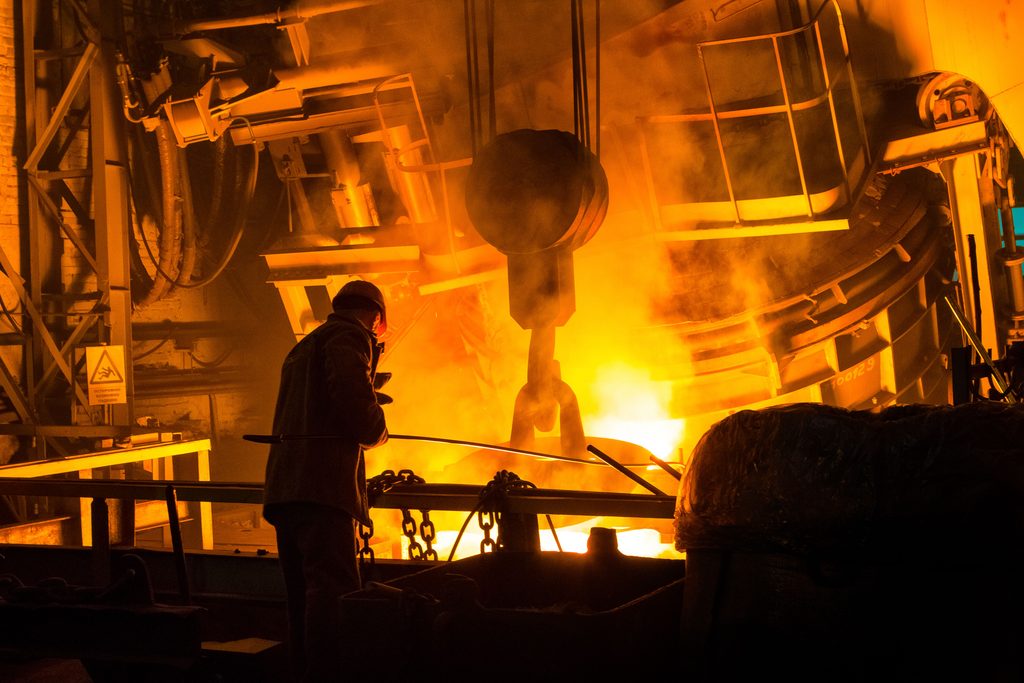
Molten Pig Iron goes into a converter along with some scrap. Pure Oxygen is blown in, and it burns off the extra Carbon and impurities in roughly 20 to 40 minutes. Big integrated plants depend on this method.
Electric Arc Furnace (EAF)
EAFs melt Scrap, Sponge Iron, or both, using electric arcs. They are flexible and easier to switch on and off, and they are the backbone of Steel recycling.
Induction Furnace (IF)
Induction Furnaces melt Scrap and Sponge Iron using electromagnetic induction. A big share of India’s secondary producers run on them, especially for TMT Bars and structural sections.
Refining and Casting
After melting, the liquid Steel goes through ladle refining to fix temperature and chemistry. Then Continuous Casting turns it into Billets, Blooms or Slabs. Rolling mills shape those into Bars, Rods, Plates, Angles, Channels and Coils.
Every step needs control. If the Process slips at the Furnace, no amount of marketing fixes it later.
Ironmaking vs. Steelmaking at a Glance
| Feature | Ironmaking | Steelmaking |
|---|---|---|
| Purpose | Extract Iron from ore | Refine Iron or scrap into Steel |
| Inputs | Ore, Coke, Limestone | Pig Iron, DRI, Scrap, alloys |
| Core process | Reduction (remove Oxygen) | Refining (remove Carbon, impurities) |
| Equipment | Blast Furnace, DRI kiln | BOF, EAF, Induction Furnace |
| Carbon in output | About 4% or more | Below about 2% |
| Output | Pig Iron, Sponge Iron | Liquid Steel, Billets, Slabs |
| Usability | Brittle, limited | Strong, ductile, widely used |
Why Carbon Is the Whole Story
Carbon is what separates Iron from Steel.
Too much Carbon and the metal turns hard and brittle. Too little and it goes soft. Steelmaking lands it in a controlled range:
- Low-carbon (Mild) Steel: easy to weld and form. Pipes, Angles, Channels and general structural work.
- Medium-carbon Steel: stronger, less ductile. Axles, shafts, machine parts.
- High-carbon Steel: very hard. Springs, tools, blades.
That is why Mild Steel dominates construction. Nothing else gives you Strength and Weldability together at that price.
How This Plays Out in India
India’s Steel industry runs on two broad models. Neither one is a villain.
Integrated Steel Plants do the whole chain themselves: Ironmaking, Steelmaking, Casting, Rolling. SAIL, Tata Steel, JSW and RINL fall in this group, though many also run semi-integrated setups.
Secondary Producers do not make Iron from ore at scale. They buy Sponge Iron, Pig Iron or Scrap, melt it in Induction or Arc Furnaces, and roll it into long products. A big share of the TMT Bars, Angles and Channels in the market comes from here.
Now, there is a lazy argument that Integrated is always good and Secondary is always bad. I don’t buy it. There is good steel and poor steel on both sides.
What matters is how tightly the mill controls its Raw Material, its Testing and its BIS Compliance. The label on the Furnace tells you very little. The Quality Control tells you everything.
The Environmental Angle
Blast Furnace Ironmaking is the most Carbon-heavy part of the whole chain because of the Coke. Scrap-based EAF Steelmaking emits far less since it skips Ore Reduction entirely.
That is why you keep hearing about Green Hydrogen DRI and higher Scrap use. For buyers today it is still mostly a cost story. But it will shape Steel pricing over the next several years, so it is worth watching.
What This Means When You Buy
You will almost never buy Pig Iron or Sponge Iron yourself. But the production route affects what lands on your site.
- Consistency: Mills with tight Process control usually deliver more uniform chemistry. Good secondary mills can match that.
- Price swings: Ore, Coking Coal, Scrap and Sponge Iron rates all feed into finished Steel prices. If you understand the inputs, the Rate movements stop feeling random.
- Paperwork: Ask for the Mill Test Certificate. Check for the BIS (ISI) mark on regulated products.
- Fit: For structural or pressure use, buy verified grades. Do not guess.
From working around the factory and trading side of the business, one thing I’ve learned is that a change in Scrap or Sponge Iron prices does not stay isolated for long. It eventually shows up in the finished Steel Rate. The important part is not just seeing that the Rate moved. It is understanding what moved underneath it, because that gives you a much better idea of what is actually happening in the market.
Myth: “Steel Doesn’t Rust”
I hear this one a lot.
Steel rusts. Mild Steel rusts quite happily if you leave it unprotected. Only Stainless Steel, with at least 10.5% Chromium, is built to resist it. And even that is not immune in harsh environments.
So when someone sells you “rust-proof Steel,” ask what Grade it is and what coating it has. If they cannot answer, you have your answer.
Frequently Asked Questions
Is Pig Iron the same as Steel?
No. Pig Iron has about 4% Carbon and is brittle. Steel has under 2% Carbon and is much stronger and more ductile
What are the main Steelmaking methods?
The Basic Oxygen Furnace (BOF), the Electric Arc Furnace (EAF) and the Induction Furnace (IF).
Which comes first, Ironmaking or Steelmaking?
Ironmaking. Its output feeds Steelmaking, though Steelmaking can also run entirely on recycled Scrap.
Does Steel rust?
Yes. Scrap-based Steelmaking in EAFs and Induction Furnaces melts recycled Steel and skips Ironmaking completely.
Does Steel rust?
Yes. Mild Steel rusts without protection. Stainless Steel resists rust because of its Chromium content, but it is not completely immune.
Bottom Line
Ironmaking takes Oxygen out of Ore. Steelmaking takes extra Carbon out of Iron. One gives you raw metal. The other gives you something you can build with.
Once you see that, a lot of the market starts making sense. Why Raw Material costs move Rates. Why Process control matters more than the brochure. Why a certified Grade is worth more than a lower price on a promise.